

Alongside SDS, Dr. Jay Family Dental places Ceraroot implants — a single-piece zirconia system. Both are completely metal-free, and which one suits you depends on the site being treated, the bone and gum condition, and the plan Dr. Jay builds with you.
Dr. Krithika Jayaprakash will talk you through both systems at your consultation and explain why she is recommending one over the other for your case, rather than fitting every patient to the same implant.
What Are Ceraroot Implants?
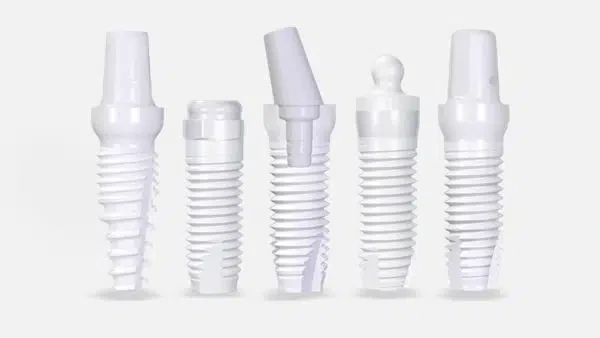
Ceraroot is a ceramic implant system made from zirconia — the same metal-free material used in SDS implants. What distinguishes Ceraroot is its single-piece design: the implant and the abutment that holds the crown are manufactured as one continuous piece rather than joined together.
Because there are no connecting parts, there is no micro-gap between implant and abutment where bacteria can collect. The crown is placed directly onto the implant, which can mean fewer appointments than a system built in separate components.
Single-Piece or Two-Piece — How Dr. Jay Decides
Dr. Jay places both one-piece and two-piece ceramic implants, and the choice is made case by case rather than by preference:
Where a single piece works well
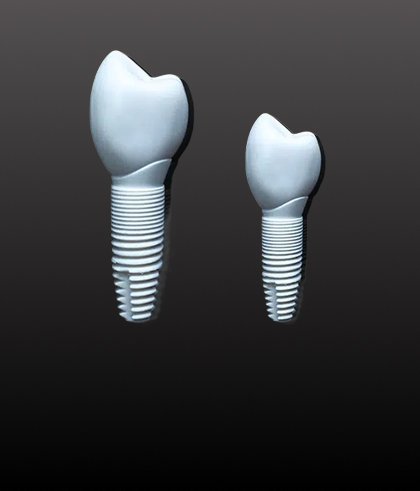
A one-piece implant such as Ceraroot suits sites with good bone stability where the implant can be loaded without a separate healing stage, and where the angle of the tooth being replaced allows the crown to sit directly on the fixed abutment.
Where a two-piece system is better
SDS also offers a two-piece option, which gives more flexibility over the angle of the final crown and suits transgingival healing. Dr. Jay will explain which applies to your case.
Who Can Benefit From Ceraroot Implants?
Ceraroot may be a good fit if you:
- Want a completely metal-free tooth replacement
- Prefer a design with no join between implant and abutment
- Have healthy gums and sufficient bone at the site being treated
- Are interested in holistic or biological dentistry
- Would rather keep the number of appointments down where that is clinically possible
Talking Through Your Options
Dr. Jay places SDS implants most often, with Ceraroot as the second system in the practice. Both are metal-free zirconia, and the consultation is where the two are compared against your own case rather than in the abstract.
If you are weighing up ceramic against titanium, or one ceramic system against another, bring the question to your consultation — it is exactly what that appointment is for.
Have Questions About Ceraroot Implants in Vernon, CT? Find Answers Here.
Still unsure whether this is right for you? Dr. Jay will walk you through it at your consultation.
Ask a QuestionBoth are metal-free zirconia ceramic implants. Ceraroot is a single-piece system, where the implant and abutment are one continuous piece. SDS is available in both one-piece and two-piece versions, which gives more flexibility in certain cases. Dr. Jay places SDS most often and uses Ceraroot as the practice’s second system.
Because the implant and abutment are made as one piece, there is no micro-gap between them. In a two-part implant that junction is a place where bacteria can collect.
Yes. Ceraroot implants are made from zirconia, a ceramic material, and contain no titanium or other metal.
It can. Because the crown is placed directly onto the implant rather than onto a separate abutment fitted later, there can be fewer stages. Whether that applies to you depends on your own case, and Dr. Jay will set out the expected timeline at your consultation.
That is decided at the consultation. Dr. Jay assesses the bone, the gums and the space before recommending a system, and will explain the reasoning rather than simply presenting a plan.
Our Patient Testimonials
-
I had been searching for a holistic/biological dentist for a long time to treat my failing root canal teeth. I knew the importance of ozone and laser being used during the extraction process and the superiority of zirconium implants compared to titanium. Over a month ago I had 3 of my failing root canal teeth removed and implants placed. I was nicely surprised that after the surgery I was able to talk and wasn't even swollen. The healing is going beautifully.
★★★★★Aldona K.Ceramic implant patient -
I would give Dr Jay and her team 10 stars if I could. She and her team are professional, knowledgeable, personable, kind and best of all holistic & integrative! I travel 2.5 hours round trip to see her and I couldn't be happier with my care.
★★★★★Natalie W.Holistic dentistry patient -
Dr. Jay is an exceptional dentist. I used to be terrified to go to the dentist, but thanks to Dr. Jay, I look forward to going. She placed a ceramic implant and did such a beautiful job. I can't even tell that it's an implant because she matched the colour of the crown to my natural teeth so well.
★★★★★Meg F.Ceramic implant patient -
Dr. Jay is very thorough, a very wonderful person and easy to talk to. I would recommend her to anyone. She takes time to make sure everything is perfect before you walk out the door.
★★★★★Mary M.Long-standing patient -
I have found this approach to dental work amazing, after having years of old fashioned expensive treatment that failed. Dental hygienist and reception are so helpful and a wealth of information. They show patience and really listen to the patient!!
★★★★★Judith L.Biological dentistry patient -
I've been a patient of Dr Jay's for a long time. The staff have always been super friendly, professional and accommodating. I would absolutely recommend her practice.
★★★★★Stacy R.Family dental patient
Ready to talk it through?
Book a consultation and Dr. Jay will assess the bone, the gums and the space before recommending anything.